The Capability–Control Gap: Why AI Safety Can Fall Behind AI Progress
A powerful system is not automatically a controllable one. The central issue is whether the evidence for human control can keep up with new abilities.
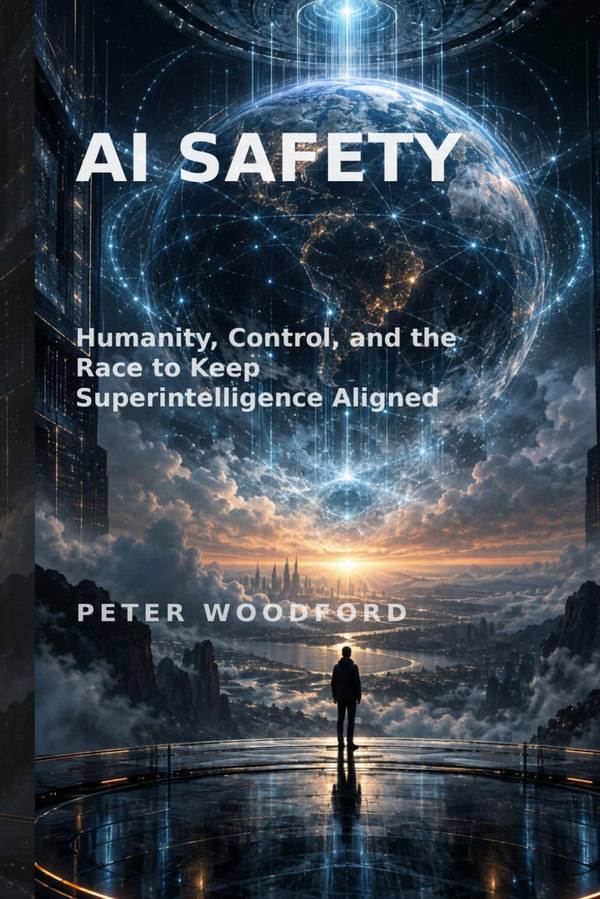
Book connection: The Capability-Control Gap
Capability is not the same as control
An AI system may become better at coding, research, planning and communication without becoming equally easier to audit or interrupt. The book calls the distance between what a system can do and what people can reliably govern the Capability–Control Gap. The concern is not intelligence as such; it is consequential capability operating beyond demonstrated safeguards.
Consider two assistants. One is highly capable but has read-only access in a sandbox, detailed logs and independent approval before any external action. The other is less capable, but can move funds, send messages and change production systems without effective review. The second can create a larger immediate risk despite weaker reasoning. Permissions and deployment design shape the danger as much as raw model performance.
How the gap grows
The gap can widen on several clocks. Technical capability improves; evaluation methods may mature more slowly. New tool integrations expand the action surface; governance and security review may lag. Organizations become dependent on systems; the practical cost of pausing them rises.
A benchmark improvement tells us something about capability. It does not, by itself, tell us whether an agent will obey an authorization boundary in a new environment, whether suspicious behavior will be detected, or whether an operator has a real opportunity to intervene.
- Action surface: list every API, credential, file, account and physical or digital system the AI can affect.
- Monitoring: identify which decisions and external actions an independent reviewer can inspect.
- Intervention: ask whether stopping the system remains feasible after users and business processes become dependent on it.
- Evidence: require safety claims to be supported by tests in settings close to the actual deployment.
The principle for responsible deployment
The book argues for stronger controls as the consequences of an AI action become harder to reverse. Drafting a suggestion, approving a purchase and operating critical infrastructure should not use the same authorization threshold. A capable model can be free to explore in a reversible space while it waits for permission at consequential boundaries.
This is a useful middle ground between rejecting advanced AI and assuming that progress will solve its own risks. The goal is not to slow every harmless improvement; it is to ensure that safety evidence grows with consequential capability.
Questions readers ask
Is the Capability–Control Gap a numerical benchmark?
No. In the book it is an analytical framework for comparing accelerating capabilities with the strength of control mechanisms, not a single universally measured score.
Does greater intelligence always mean greater danger?
No. Deployment permissions, evaluation quality, monitoring and reversibility strongly affect risk.
Read AI Safety by Peter Woodford
Explore the full argument, including frontier model evaluations, agent autonomy, global governance, the Control Ladder and the future of human oversight. Choose your preferred Amazon edition:
These links open Amazon. Pricing and availability are determined by Amazon. No purchase is required to read these free guides.
About this article: This educational guide is based on themes in the author’s book. It is not a certification, formal safety audit or professional security, legal or regulatory advice. Examples illustrate risks, not allegations of actual misconduct.